Uncle Toby’s fortifications
The Life and Opinions of Tristram Shandy, GentlemanUncle Toby’s fortifications are the miniature defensive works that Uncle Toby and Corporal Trim build on the bowling-green, translating military engineering into an ongoing domestic hobby. They are not merely scenery: the works organize Toby’s recollections of service, Trim’s loyalty and participation, and the family’s conversations, while their ditches, bridges, and defenses repeatedly become the physical setting for accidents and narrative detours.
Design and Military Imagination
The fortifications give practical form to Uncle Toby’s enduring interest in military affairs. Their vocabulary and layout belong to the world of actual siegecraft: a horn-work, covered way, ditch, and other defensive features appear in discussions that move readily between the bowling-green and the history of fortification. Toby’s recollection of service before the Gate of St. Nicolas can take hold of him in the middle of a family conversation; he becomes absorbed in the approaches and traverses of that attack, particularly the place where he was wounded, and reaches for his map of Namur and instruments to measure the angles. The model works thus furnish a route from present domestic talk into remembered military experience.
That imaginative traffic also shapes how Toby interprets military scenes beyond his own model. When a sermon describes seven watchmen stationed on a tower, Corporal Trim judges that number excessive from his experience of command, while Toby argues that the tower’s position and lack of later defensive works would require a larger guard. Their exchange shows the fortifications’ governing habit of thought: scriptural description becomes an occasion for practical military analysis, and the domestic companions reason from the changing forms of defense they know.
A Shared Practice and a Narrative Crossroads
The works belong to Uncle Toby and Trim together. Their building and upkeep create a shared routine, and Trim’s attachment to his master extends to the pursuits Toby chooses. The narrator explicitly presents Trim as ready to imitate him, even if Toby had spent his time on an entirely different occupation. The bowling-green is therefore both a miniature theater of war and a setting for the affectionate partnership between master and corporal.
Their importance to the book’s structure is made explicit when the narrator hesitates over where to tell an adventure of Trim’s. The incident could belong with Toby’s courtship of Widow Wadman, because Trim has a part in that story, or with the campaigns staged on the bowling-green. Placing it in either location, the narrator explains, would damage the other thread; telling it where it stands anticipates events elsewhere. The fortifications are consequently more than a backdrop: they are one of the narrative paths along which the book’s episodes meet and compete for placement.
The Drawbridge Accident
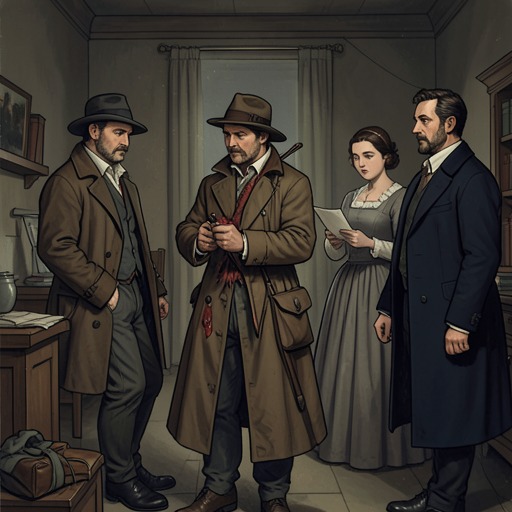
The clearest collision between the model works and household life comes after Trim takes Bridget to see them. One moonlit night, after putting Uncle Toby to bed, Trim goes to check that everything is in order at the fortifications. He meets Bridget in a lane beside the bowling-green and leads her in to see what he and Toby have made. Their visit ends in a mishap near the ditch: in the account Trim gives, he slips while showing her the works, and she falls against the bridge; Toby’s version adds that Trim also tumbles against it. The Dutch-style drawbridge, built to span the ditch, is broken and splintered.
The accident acquires a second life in the family’s retellings. Walter Shandy, who regards Toby’s military hobby with amused skepticism, returns to the damaged bridge as a subject of persistent entertainment. Toby insists that he has told the story exactly as Trim told it to him, while Walter’s questioning and knowing amusement make the mishap seem more comic than the participants’ straightforward explanations warrant. The broken object records a real interruption to the model’s use, but it also becomes a recurring conversational prop, with the brothers’ differing attitudes to Toby’s hobby shaping how the incident is remembered.
Repair, Disruption, and Significance
The bridge is declared irreparable, and Trim is ordered to build another, though not on the same design. Uncle Toby initially anticipates a campaign in Italy and calls for an Italian bridge. Walter counters that if Spain and the Emperor went to war, England, France, and Holland would be drawn in by their commitments, and the fighting would return to Flanders. Toby accepts that possibility and says they can continue with the old model. The proposed replacement turns contemporary political speculation back into a question of miniature engineering: the shape of the model follows the campaign Toby expects to reconstruct.
The fortifications remain exposed to interruptions from the surrounding household as well as to the mishaps of their builders. A cow breaks into them, eats two and a half rations of dried grass, and tears up the sods facing the horn-work and covered way. Trim demands a court-martial and wants the cow shot; the narrator folds the damage into a rush of household calamities and unfinished stories. Later, Trim avoids discussing the cow’s destruction when he realizes that Uncle Toby is speaking about another misfortune. The incident establishes the works’ vulnerability and gives them a place within the book’s accumulating domestic disorder.
Through their details and disruptions, the fortifications make Uncle Toby’s military imagination tangible without separating it from ordinary life. A map, a recalled siege, a broken bridge, and a cow among the defenses can all occupy the same narrative world. The model’s mock campaigns coexist with household obligations, courtship, and accidental damage; their importance lies in this continual crossing between disciplined military design and the unpredictable life around it.